
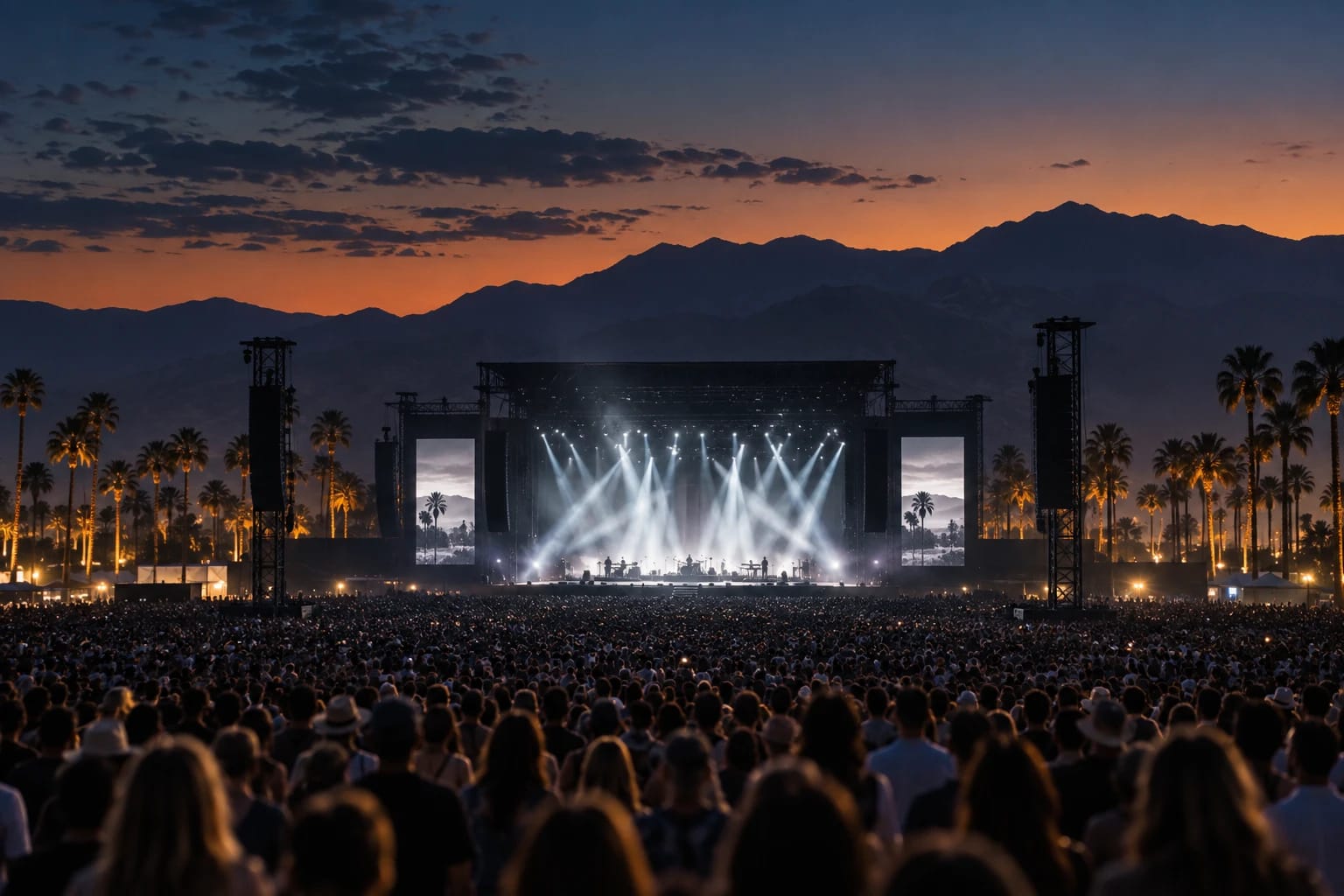
A considered security plan behind an experience people came to enjoy.
Palm Springs& the Coachella Valley
Built around your property
One plan.
Every part connected.
From the first vendor arrival to the final guest departure, a clear plan lets your team focus on the event.
Orderly arrivals
A clear entry and credential process
Attentive guest support
Defined coverage across the venue
Coordinated closeout
Coordination with your event operations team
No two events move the same way. We work through the venue, entry process, restricted areas and communication structure with your team, then define the officer responsibilities around that plan.
Event operations · Illustrative scenario
Every post.
One coordinated event.
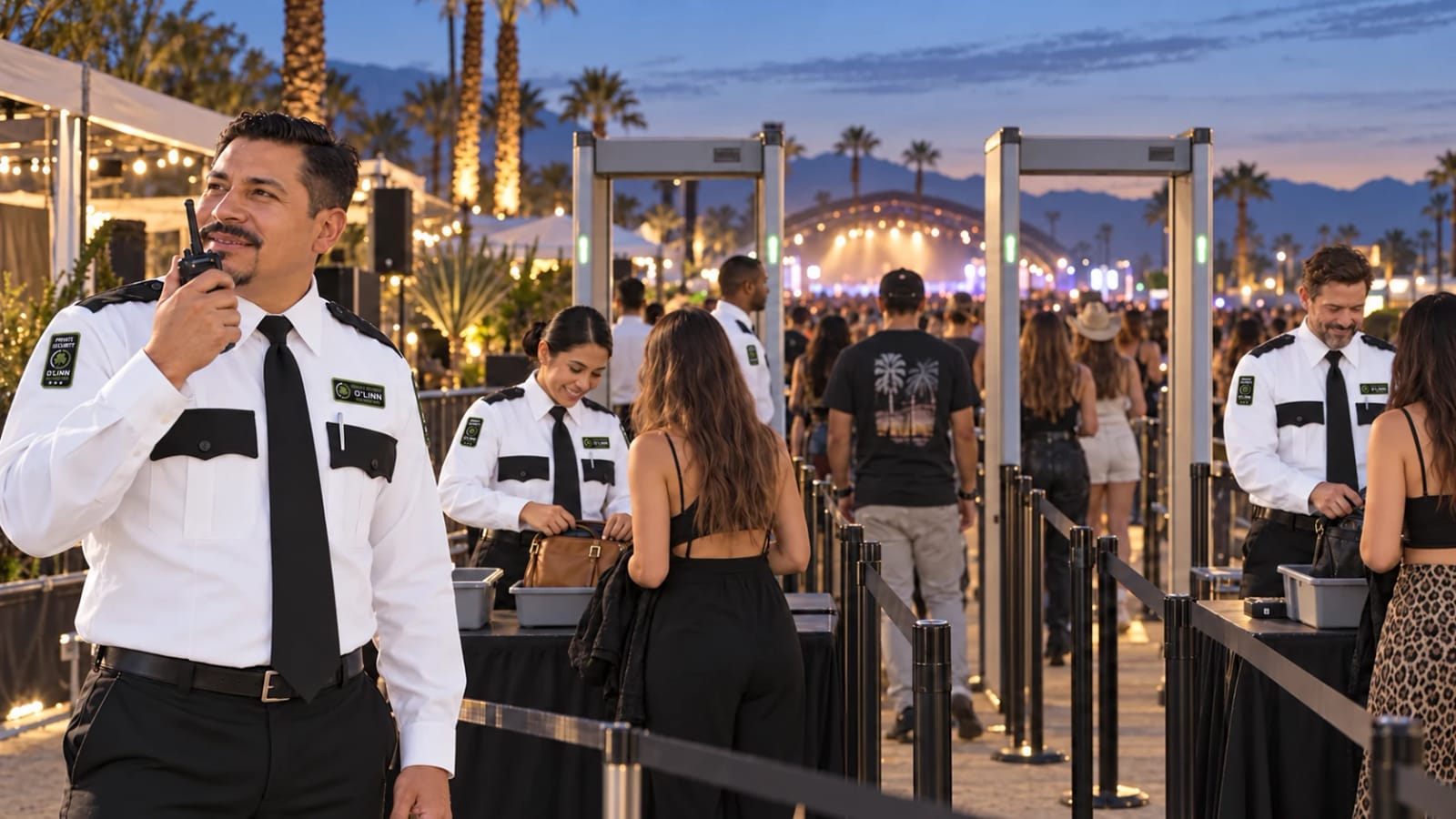
Count arrivals, manage screening lines, communicate by radio and keep performer access organized. The event plan sets the roles; the reporting gives supervisors a record.
- 01See it on patrol
- 02Document the details
- 03Connect the right team
“Entry lead to event command: lane two needs support. Please confirm reassignment.”
Entry screening
Main entry · Screening lanes
- Field note
- Manual entry count recorded: 826. The bag-check queue is building at lane two. The entry lead requests another assigned screener.
- Record
- Headcount, queue condition and supervisor decision logged.
“Floor two to event command: support requested at the east cross-aisle.”
Crowd & radio
Audience area · East cross-aisle
- Field note
- An officer observes guests gathering near the cross-aisle and requests floor-team support to maintain the planned route.
- Record
- Observation, radio request and action recorded.
“Backstage to production: delivery at the bus compound. Requesting authorization.”
Performer access
Backstage · Bus and trailer access
- Field note
- A delivery arrives at the performer compound. The officer checks the credential and waits for production authorization before access.
- Record
- Access exception and production decision documented.
Officers perform the screening and counts. Radios coordinate the team. Vision InSites documents the observations and actions—these examples do not imply automated headcount, metal detection or radio integration.
Explore Vision InSitesSolar towers · Camera coverage · People on the ground
Visibility across the footprint.
For suitable outdoor events, temporary cameras can support an agreed monitoring plan. Officers handle the real-world interaction and keep the event team informed.
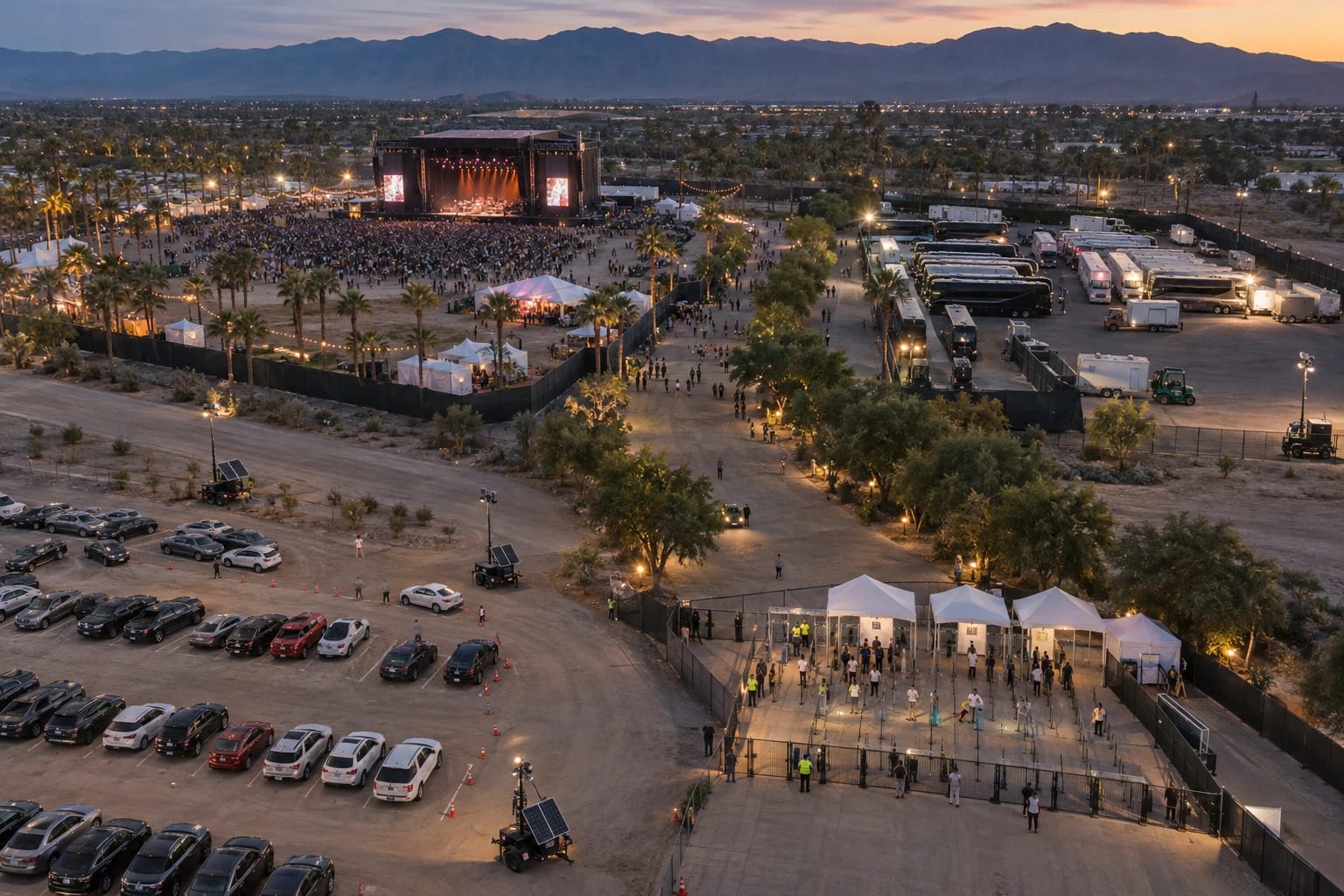
01 / Guest parking
A wider view of arrivals.
A solar camera tower can extend visibility over an agreed parking area.
Event command directs parking staff or assigned patrol to the reported location.
02 / Entry lanes
Keep the entry team connected.
An agreed camera view can help supervisors assess queue conditions.
The entry lead coordinates screeners and guest-flow adjustments by radio.
03 / Performer compound
Protect the space behind the show.
A suitable tower or temporary camera can watch the bus and trailer access area.
The backstage officer checks access with production. A camera does not authorize a credential.
Solar-powered camera towers
Parking coverage. Performer-area awareness.
Plan temporary views for parking and the performer bus or trailer compound. Event command, entry leads and backstage officers need a clear radio and response plan.
Monitoring hours, dispatch and response scope are specified in your agreement.
Before doors open
Know the venue.
Know your role.
An event briefing is about the venue, screening rules, radio plan and credentials. Put those instructions where officers can refer to them throughout the assignment.
Explore Vision InSites micro-trainingLESSON 01 / 03
Prepare the screening lanes.
Review the approved bag policy, metal-detection procedure, guest communication and escalation contacts. Know which staff are assigned to screening before doors open.
LESSON 02 / 03
Know your call sign and route.
Review the event radio plan, assigned channel, call signs, venue orientation and who directs crowd-flow changes. Practice a clear location-first call.
LESSON 03 / 03
Recognize the right credential.
Review access zones, approved credentials, performer transport routes and the person authorized to approve exceptions. Keep guest and production routes distinct.
The details behind the experience
A clear scope.
No guessing.
We start with the event format, site plan, attendance expectations and operating schedule. Staffing, post assignments, communication and escalation procedures are established before service begins.
01Entry & credentialsSet the tone at the entrance.
A defined entry process makes access responsibilities clear. Officer duties are aligned with your ticketing, credential and venue policies so the event team understands how exceptions are handled.
- Event-specific entry instructions
- Credential and authorization checks as scoped
- Communication with ticketing and venue staff
- Exceptions escalated to the agreed contact
We identify who controls admission, who can authorize an exception and how the entrance team communicates.
02Venue coverageA visible presence where it matters.
Officer placement is developed around the event layout and operating plan. Assigned areas, guest-facing responsibilities and incident reporting are defined with the venue team.
- Assigned venue coverage areas
- Guest-facing security responsibilities
- Documented incidents and observations
- Escalation coordinated with event operations
The plan accounts for circulation, gathering areas and the responsibilities of venue, production and security teams.
03Restricted accessThe right access, clearly defined.
Back-of-house, production and other restricted areas follow the event’s access rules. Officers work from approved credentials and instructions established by authorized event personnel.
- Back-of-house entry procedures
- Approved-personnel and credential checks
- Coordination with production contacts
- Recorded access exceptions as required
Restricted zones, credentials and authorization contacts are agreed with your production team.
Good questions. Clear answers.
Can you work alongside our venue staff?
Yes. The operating plan should define how security, venue staff, ticketing and production coordinate their responsibilities.
How is staffing determined?
We review the event format, site layout, expected attendance, entry points and operating requirements before proposing the coverage scope.
Do you cover recurring events?
We can discuss a recurring service plan and review its scope as the event format, venue or operational needs change.
Palm Springs & the Coachella Valley
Local people.
Local protection.
O’Linn Security is family owned and based in Palm Springs. We plan coverage with communities, property managers and event teams throughout the Coachella Valley.
Start with our 24-hour office line at 760.320.5303. Dispatch connects you with the on-duty supervisor or the right person for your needs.
1027 S Palm Canyon Dr, Palm Springs, CA 92264- Palm Springs
- Desert Hot Springs
- Cathedral City
- Rancho Mirage
- Palm Desert
- Indian Wells
- La Quinta
- Indio
- Coachella
Start with a conversation
Your property.
Our personal attention.
Tell us what matters to you. We’ll put the people, procedures and technology into a plan you can understand.